


Psicomotricistas no Mundo- Holanda/ Psychomotricists Abroad- Netherlands
- Intervir +

- 13 de mar. de 2021
- 5 min de leitura
PT: É com grande alegria que vos apresento uma nova rubrica da nossa página: Psicomotristas no Mundo.
Nós acreditamos que a partilha tem um papel importante nas nossas aprendizagens enquanto terapeutas e existir esta troca de realidades com outros países é fundamental. Juntem-se a nós nesta viagem!
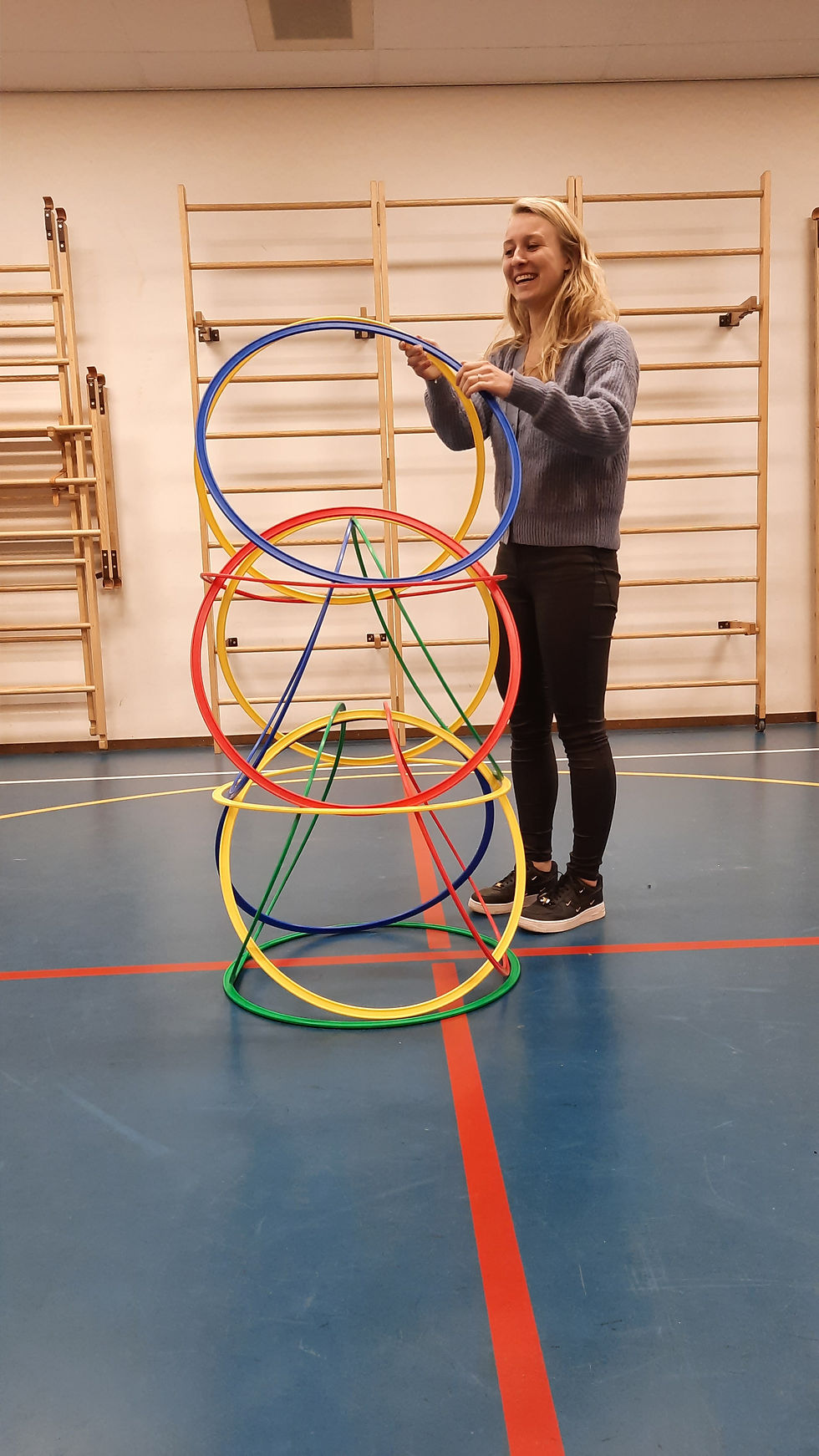
Apresento-vos a nossa primeira convidada, a Psicomotricista Daniek. Ao longo da entrevista vão conseguir perceber melhor sobre a sua intervenção na Holanda. Muito obrigada por aceitar este desafio!
ING: It is with great joy that I present to you a new item on our page: Psychomotorists in the World. We believe that sharing has an important role in our learning as therapists and that this exchange of realities with other countries is essential. Join us on this trip!
I present to you our first guest, Psychomotricist Daniek. Throughout the interview you will be able to understand better about her intervention in the Netherlands. Thank you so much for accepting this challenge!
1- PT: Que tipo de formação académica é necessária para ser Psicomotricista no seu país?
Um estudo politécnico de 4 anos (estágio cerca de 50%). ING: What kind of academic training is necessary to be a Psychomotricist in your country?
A polytechnic study of 4 years (about 50% internship).
2- PT: No vosso país, a Psicomotricidade é uma profissão reconhecida? As pessoas conhecem a área? Sim, é uma profissão reconhecida e muitas pessoas conhecem a profissão. ING: In your country, is psychomotricity a recognized profession? Do people know the field?
Yes, it’s a recognized profession and a lot of people know the profession.
3- PT: Qual é a média de salários? Para quantas horas de trabalho? Os salários variam entre 3.109€ e 3.503€ mensais. ING: What is the average salary? For how many hours of work?
The salarys vary between 3109€ and 3503€ a month.
4- PT: Trabalham com equipas multidisciplinares? Se sim, qual é o papel do Psicomotricista nessas equipas? E quais são os outros profissionais com que trabalham?
Depende da organização. Eu trabalho no Intraverte e lá trabalhamos com os terapeutas ocupacionais e educadores de recuperação. ING: Do you work with multidisciplinary teams? If so, what is the role of the Psychomotricist in these teams? And who are the other professionals you work with?
It depends on the organisation. I work at Intraverte and there we work with occupational theperapists and remedial educationalists.
5- PT: Que tipo de instituições e populações recorrem mais à contratação de um Psicomotricista? Pessoas com disfunções socio-emocionais. Podem ser adultos e crianças. Também trabalhamos com pessoas com deficiência intelectual ou jovens problemáticos. Depende da organização. ING: What types of institutions and populations resort most to hiring a Psychomotricist?
People with social-emotional disfunctions. This can be adults and children. We also work with mentaly disabled people or troubled youth. Depending on the organisation.
6- PT: É difícil encontrar trabalho nesta área? Em que zonas do país existe maior oferta? Não é tão difícil na Holanda. Tão difícil quanto qualquer outro trabalho. Os empregos são mais nas grandes cidades, mas podem conseguir um emprego nas outras partes do país. ING: Is it difficult to find work in this field? In which areas of the country is there the greatest supply?
It’s not that difficult in the Netherlands.About as difficult as any other job. The jobs are more in the big cities, but you can get a job in the other parts of the country to.
7- PT: Acham que é possível trabalhar no vosso país (como psicomotricista) falando inglês?
Não acho que será fácil. A maioria das pessoas fala holandês e, quando falamos sobre emoções, geralmente falamos na nossa língua materna.
ING: Do you think it is possible to work in your country (as a Psychomotricist) speaking English?
I don’t think it will be easy. Most people speak dutch and when you speak about your emotions you generaly speak in your mother language.
8- PT: De forma geral, como são as condições no trabalho? São ambientes adaptados às populações e com variedade de materiais para utilizar nas sessões? Eu trabalho nos ginásios das escolas primárias. Eu trabalho em 5 escolas diferentes durante a semana. Trabalho com bolas, argolas, pufes, luvas de boxe e muito mais.
ING: In general, what are the conditions like at work? Are the environments adapred to populations and which is the a variety of materials used in sessions? I work at the primary schools in the schoolgyms. I work at 5 different schools during the week. I work with balls, hoelahoops, beanbags, boxinggloves, and so much more.
9- PT: A profissão faz parte do sistema de saúde público?
A psicomotricidade não está no seguro básico, o que significa que temos que conseguir um seguro extra ou pagar por ele nós mesmo. ING: Is the profession part of the public health system? Psychomotricity is not in the basic insurence, wich means that you have te get extra insurence or you have to pay for it yourself.
10- PT: Costumam trabalhar em sessões de grupo, individual ou ambos?
Nós fazemos ambos. A maioria das crianças que tratamos começa com sessões individuais e elas estarão em sessões de grupo quando terminarmos.
ING: Do you usually work in groups sessions, individually or both?
We do both. Most children we treat start with individual sessions and they will be in group sessions when the’re further allong.
11- PT: Que tipo de metodologia utilizam nas sessões? Como é que avaliam e planeiam uma sessão?
As metodologias que utilizamos são terapia cognitivo-comportamental (pensamentos-sentimentos-comportamento), terapia de exposição, modelo biopsicossocial. A avaliação das sessões ou da evolução com o paciente acontece a cada 6 semanas aproximadamente. E nós mesmos avaliamos a sessão durante o relatório. Planeamos a próxima sessão enquanto relatamos sobre a sessão daquele dia.
ING: What kind of methodology do you use in the sessions? How do you evaluate and plan a session?
The methodologies we use are cognitive behavioral therapy (thoughts-feelings-behaviour), exposure therapy, biopschosocial-model. Evaluating the sessions or the progression with the patient happens about every 6 weeks. And we evaluate the session ourselfs during reporting. We plan the next session while reporting about the session of that day.
12- PT: No seu país, no que é que se diferencia a profissão de Terapeuta Ocupacional com a nossa?
No nosso país o Terapeuta Ocupacional costuma tratar pessoas com problemas físicos e crianças com problemas de desenvolvimento motor. Os psicomotricistas tratam problemas sociais e / ou emocionais.
ING: In your country, how does the profession of Occupational Therapist differ from ours?
In our contry the Occupational Therapist usualy treat people with fysical problems and children with motor divelopment problems. The Psychomotricists treat social and/or emotional problems.
13- PT: Para ti, que materiais ou jogos é que são indispensáveis nas sessões? Qual é o teu top 3?
Trabalho em academias de escolas primárias, então uso o que encontro lá. Principalmente bolas, arcos, equipamento de boxe, uma estrutura de escalada e muito mais.
1. Bolas
2. Arcos
3. Corda
ING: For you, what materials or games are indispensable in the sessions? what is your top 3? I work at de gyms of primary schools, so i use what i find there. Mostly balls, hoelahoops, boxing gear, a climbing frame and lots more. 1. Balls
2. hoelahoops
3. Rope
PT: Espero que tenham gostado e desejo a todos um bom fim de semana !
ING: I hope you enjoyed it and wish you all a good weekend!


Comentários